Source 3d breathable ankle support for Basketball, Tennis, Football
Find and compare 30 listings for the 3d breathable ankle support designed for basketball, tennis, and football. Buyers can evaluate specifications like material composition, adjustability, and customization options to select the right supplier for their needs.
Key considerations
Products List


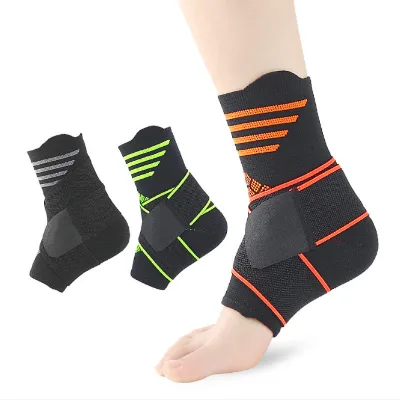


Comprehensive Sourcing Guide
Strategic Sourcing Guide for 3D Breathable Ankle Support
The global demand for athletic protective gear has intensified, with the 3D breathable ankle support emerging as a critical component for injury prevention and recovery in high-impact sports. For B2B procurement professionals, sourcing these items requires a nuanced understanding of material composition, manufacturing standards, and supply chain logistics. The term "3D breathable" often implies a specific knit structure designed to enhance airflow and moisture management, yet buyers must verify these claims against actual product specifications rather than marketing terminology alone. This guide provides a structured approach to evaluating suppliers and products, ensuring that procurement decisions are grounded in verifiable data and industry best practices.
Technical Specifications and Material Composition
The foundation of any effective ankle support lies in its material composition and structural design. In the current market, products are frequently constructed from blends of synthetic fibers to balance elasticity, durability, and breathability. Analysis of available product data reveals that common material standards include polyester, nylon, and rubber blends, with specific ratios varying by manufacturer. For instance, one observed standard specifies a composition of 55% polyester and 45% rubber, while another utilizes a blend of 65% nylon and 35% rubber. A third variation employs 80% nylon and 20% spandex, categorized under elastic fabric materials.
When evaluating a 3D breathable ankle support, buyers must scrutinize the "prod_standard" or material specification sheets to confirm the fiber ratios. The presence of spandex or rubber is crucial for the compression and fit required to stabilize the ankle joint. Furthermore, the thickness of the product is a significant technical variable; observed specifications indicate a "Medium" thickness classification, which suggests a balance between protection and flexibility. Buyers should request detailed material breakdowns to ensure the product meets the specific compression needs of their target demographic, whether for professional athletes or general recreational users. The distinction between "Non-Waterproof" and "Waterproof" variants also exists in the market, necessitating a clear definition of the intended use case during the sourcing phase.
Compliance, Certification, and Safety Standards
In the medical and sports equipment sectors, compliance with international safety standards is non-negotiable. Procurement teams must verify that suppliers possess valid certifications that align with the regulatory requirements of the destination market. The supplied data indicates that certain ankle support models carry FDA and CE certifications. The CE marking, in particular, is a mandatory conformity mark for products sold within the European Economic Area, signifying that the product meets EU safety, health, and environmental protection requirements.
However, buyers should exercise caution and not assume that all listed products automatically satisfy every certification requirement. Certification status can vary by specific model number and production batch. For example, while some items are explicitly listed with FDA/CE certification, others may only carry a CE mark or none at all. It is the buyer's responsibility to request current, valid certificates of conformity for the specific SKU being ordered. Additionally, the "prod_standard" often includes size classifications such as M, L, and XL, which must be verified against local sizing regulations. Ensuring that the supplier can provide up-to-date documentation for FDA and CE compliance is a critical step in mitigating liability risks and ensuring market access.
Cost Drivers and Economic Factors
The pricing of 3D breathable ankle supports is influenced by several dynamic factors, including material costs, customization requirements, and order volume. The observed price range in the market spans from $0.42 to $8.00 USD per unit, a wide variance that reflects differences in material quality, brand positioning, and order quantity. The Minimum Order Quantity (MOQ) is a primary driver of unit cost, with observed ranges extending from 10 units to 2,448 units. Suppliers typically offer tiered pricing structures where higher volumes result in lower per-unit costs.
Customization is another significant cost driver. The availability of custom logos and tailored packaging often incurs additional setup fees and higher MOQs. For instance, one supplier lists an MOQ of 300 PCS for custom logo requests, while another requires 1,000 PCS for similar services. Buyers must balance the desire for branding with the economic reality of MOQs. Furthermore, the production timeline affects cost; standard production times are noted around 25 to 35 days, while sample times range from 7 to 12 days. Rush orders or expedited shipping can significantly increase the total landed cost. Procurement strategies should account for these variables by planning lead times well in advance and negotiating volume discounts based on projected annual demand.
Typical Applications and Usage Scenarios
Understanding the specific applications of ankle supports is essential for matching the right product to the right market segment. The supplied data highlights a diverse range of protection projects, including basketball, tennis, badminton, table tennis, and football. Some models are specifically designed for fracture support, indicating a higher level of structural rigidity and medical-grade application. The "Function" attribute often describes the product as designed to provide "firm and comfortable support," which is a key selling point for athletes seeking stability without sacrificing mobility.
The distinction between adjustable and unadjustable models also dictates application. Unadjustable sleeves, such as those with model number GS-160, are typically used for general compression and mild support in sports like basketball and tennis. In contrast, adjustable models, like those with model number 604102, offer customizable tension, making them suitable for users with specific rehabilitation needs or varying ankle sizes. Buyers should categorize their inventory based on these functional differences. For example, a distributor focusing on professional sports teams might prioritize adjustable models for their versatility, while a retailer targeting casual runners might focus on unadjustable, breathable sleeves for everyday use.
Supplier Evaluation and Verification
Selecting the right supplier requires a rigorous evaluation process that goes beyond price comparisons. Buyers should assess the supplier's origin, as the supplied data indicates production origins in locations such as Yangzhou and general China-based manufacturing. While these locations are known for textile and sports equipment production, buyers must verify the supplier's capacity to maintain consistent quality. Key evaluation criteria include the supplier's response to customization requests, their sample turnaround times, and their production capacity.
The availability of OEM and ODM services is a strong indicator of a supplier's flexibility. Many suppliers offer customized support, allowing buyers to tailor products to their brand's specific needs. However, buyers must verify the supplier's ability to meet these custom requirements without compromising on material integrity. The "Sample Time" of 7-12 days and "Production Time" of 25-35 days are standard benchmarks; deviations from these timelines may indicate capacity issues or logistical bottlenecks. Additionally, buyers should request product samples to physically inspect the "3D breathable" claim, checking the knit density and material feel before committing to a large order.
Quality Control and Long-Term Procurement
Implementing a robust quality control (QC) protocol is vital for maintaining brand reputation and customer satisfaction. Given the wide range of observed MOQs and price points, the risk of quality inconsistency is a real concern. Buyers should establish clear acceptance criteria based on the "prod_standard" and material specifications. Regular third-party inspections or in-house QC checks should be conducted to verify that the final product matches the approved sample in terms of thickness, elasticity, and stitching quality.
Long-term procurement considerations also involve managing the supply chain's resilience. The "Packing" specifications, such as 72 boxes per outer carton, must be optimized for logistics efficiency to reduce shipping costs and damage risks. Buyers should also consider the environmental impact of the materials used, as the shift towards sustainable fabrics is becoming a market expectation. Finally, maintaining open communication with suppliers regarding production updates and potential delays is crucial. By fostering a collaborative relationship and adhering to strict quality standards, buyers can ensure a steady supply of high-performance 3D breathable ankle supports that meet the evolving needs of the global market.
Comparative Analysis of Product Variants
To assist in decision-making, the following table summarizes key differences between observed product variants based on the supplied data. This comparison highlights the diversity in materials, certifications, and functional attributes available in the market.
| Feature | Model GS-160 | Model 604103 | Model 604102 | Model GS-460 | Model WN168 |
|---|---|---|---|---|---|
| Description | Knitting Support-Ankle | Ankle Support | Ankle Support | Leica Support-Ankle | Ankle Sleeve Brace |
| Material | Polyester | Nylon/Rubber Blend | Nylon/Rubber Blend | Elastic Fabric | Elastic Fabric |
| Standard | 55% Polyester / 45% Rubber | 65% Nylon / 35% Rubber | 55% Nylon / 45% Rubber | 80% Nylon / 20% Spandex | M, L, XL |
| Adjustability | Unadjustable | Not Specified | Adjustable | Not Specified | Not Specified |
| Waterproof | Non-Waterproof | Not Specified | Not Specified | Not Specified | Waterproof |
| Certification | FDA/CE | FDA/CE | FDA/CE | FDA/CE | Not Specified |
| MOQ | Not Specified | Not Specified | Not Specified | 300 PCS | 1000 PCS |
| Origin | Yangzhou | Not Specified | Not Specified | Not Specified | China |
This table illustrates that while many products share common certifications like FDA/CE, the material composition and functional attributes vary significantly. Buyers must align these technical specifications with their specific market requirements to ensure optimal product performance and customer satisfaction.
FAQs
What materials are used in 3d breathable ankle support?
Common materials include polyester, nylon, and rubber blends. Specific standards vary, such as 55% polyester with 45% rubber or 80% nylon with 20% spandex. Buyers must verify the exact fiber ratio in the product specification sheet before ordering.
Which certifications are available for 3d breathable ankle support?
Some models carry FDA and CE certifications. These marks indicate compliance with safety and health standards for specific markets. However, certification status varies by model, so buyers must request valid certificates for the specific SKU they intend to purchase.
How does customization affect the minimum order quantity?
Customization options like logos often increase the minimum order quantity. One supplier requires 300 pieces for custom logos, while another sets the threshold at 1000 pieces. Buyers should balance branding needs with these volume requirements to manage costs effectively.
Can I find adjustable 3d breathable ankle support models?
Yes, adjustable models are available for specific support needs. For example, model 604102 is adjustable, whereas model GS-160 is unadjustable. Selecting the right type depends on whether the user requires firm compression or customizable tension for rehabilitation.
What is the typical production time for 3d breathable ankle support?
Standard production times range from 25 to 35 days. Sample preparation typically takes 7 to 12 days. Buyers should plan their inventory orders well in advance to accommodate these lead times and avoid delays in receiving their goods.
Where are 3d breathable ankle support products manufactured?
Products are manufactured in locations such as Yangzhou and other parts of China. These regions are known for textile and sports equipment production. Buyers should verify the specific origin of the supplier to ensure quality standards and logistical efficiency.
What is the price range for 3d breathable ankle support?
The observed price range spans from 0.42 to 8 USD per unit. This variance reflects differences in material quality, customization, and order volume. Lower prices are often associated with higher minimum order quantities and standard specifications.